The Modular Open Systems Approach (MOSA) is how the DoD now expects weapon systems to be built: modular hardware and software connected by open, published interfaces, so a program can upgrade one capability or bring in a new supplier without redesigning the whole platform. The Sensor Open Systems Architecture (SOSA) is the most mature hardware standard that puts MOSA into practice for C5ISR, radar, EW and SIGINT processing. It builds on OpenVPX so boards, backplanes and power supplies from different manufacturers work together in one chassis.
NewTec Reps supports defense contractors and program offices across Maryland, Virginia and Washington DC with SOSA aligned VPX hardware, small form factor SOSA systems and the local application engineering to get them specified correctly.
What MOSA means for your program
MOSA is policy, not a product. Since the FY2017 NDAA, major defense acquisition programs are required by law (10 U.S.C. 4401) to be designed with a modular open systems approach. In practice that means the government wants to own or control the key interfaces, avoid single source lock-in, and refresh technology on a schedule that matches the threat instead of the original contract.
For hardware teams, MOSA shows up as requirements language: open standards at the module level, documented interfaces, and evidence that a board or subsystem can be replaced by a compatible part from another source. SOSA, CMOSS, FACE and OpenVPX are the standards most often used to meet it.
What SOSA adds on top of OpenVPX
OpenVPX (VITA 65) already defines slot, module and backplane profiles so 3U and 6U VPX boards interoperate. SOSA narrows those choices down to a smaller, tightly defined set of profiles and adds rules that OpenVPX leaves open. The result is a much higher chance that a board from one vendor drops into a backplane from another and simply works.
Key elements of a SOSA aligned hardware system:
- 3U and 6U OpenVPX module and slot profiles selected from the SOSA standard
- High speed data plane fabric at up to 25 Gbps per lane (100GBASE-KR4 class)
- VITA 67.3 RF and VITA 66 optical connectors in the backplane for apertures and sensor I/O
- VITA 62 plug-in power supplies with defined outputs and hold-up
- VITA 46.11 based system management, so chassis managers and plug-in cards report health the same way
- VITA 48 conduction or air cooled mechanicals for deployed environments
SOSA is managed by the SOSA Consortium under The Open Group, with sponsors including the Army, Navy and Air Force.
SOSA vs. MOSA vs. OpenVPX
| SOSA | MOSA | OpenVPX (VITA 65) | |
|---|---|---|---|
| What it is | Technical standard for sensor and C5ISR systems | DoD acquisition policy and design approach | Hardware interoperability specification |
| Who owns it | SOSA Consortium (The Open Group) | DoD, required by statute | VITA |
| Scope | Sensor processing hardware, software and interfaces | Any weapon system, hardware and software | VPX slot, module and backplane profiles |
| What you buy | SOSA aligned boards, backplanes, chassis, power | Nothing directly. It shapes requirements | OpenVPX compliant boards and backplanes |
SOSA aligned hardware from our principals
Backplanes, power and test from Dawn VME
Dawn VME is a founding member of VITA and builds the infrastructure a SOSA system sits on.
- SOSA aligned VPX backplanes: VPX-0354 (3U, 25G), VPX-0344 (6U, 25G), VPX-0433, VPX-0557 and VPX-0650 (3U), and VPX-9909 (6U with VITA 67.3 RF)
- VPX power supplies: PSC-8742 SOSA 3U supply with integrated hold-up, plus VITA 62 supplies from 400 W to 800 W for 28 VDC and universal AC input

- Test and integration: ITM-6976 SOSA 6U Intelligent VPX Test Module, VPX-3672 and VPX-3673 VITA 67.2/67.3 RF test extenders, SUR-853 USB to RS-232 adapter, and ECM-9958 Ethernet conversion module
- Enclosures and development chassis for lab bring-up through deployed ATR packaging
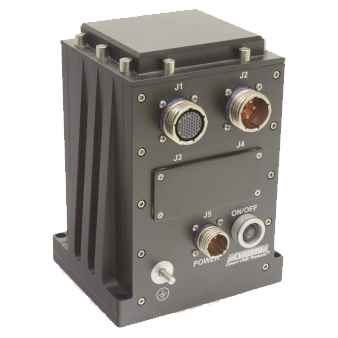
- RuSH system health monitors for temperature, voltage and fan monitoring in deployed VPX systems
Small form factor SOSA from GET Engineering
When a 3U VPX chassis is too large, GET Engineering’s VNX+ (VITA 90) modular system brings SOSA principles to a much smaller package. Because VNX+ is an open VITA standard with modules available from multiple sources, it supports a MOSA approach directly. SOSA’s published hardware profiles are built on 3U and 6U OpenVPX, so ask us for the current SOSA status of any VNX+ configuration. Five, six or seven module slots carry SBC, GPU, FPGA, high density I/O, Ethernet switch, PNT, IMU and NTDS/ATDS modules in a conduction cooled chassis designed to MIL-STD-810 and MIL-STD-461. It fits UAV payloads, sonobuoys, ground vehicles and other SWaP limited platforms.
GET Engineering also offers its FPGA based AI at the edge workflow on a VPX platform for programs that need real time inference inside a SOSA style system.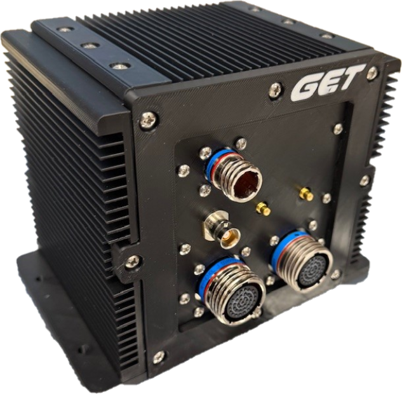
Avionics I/O and IP for open architecture systems
- AIM MIL-STD-1553, ARINC 429 and AFDX interfaces in XMC and PMC form factors, including conduction cooled versions for VPX carriers
- NOLAM FPGA IP cores for MIL-STD-1553, ARINC 429, CAN and SpaceWire, plus VPX and XMC board products
How we help programs get SOSA right
“SOSA aligned” claims vary a lot between vendors. Before a board goes on your bill of materials, our engineering-degreed team checks the details that cause problems in integration:
- Which SOSA slot and module profiles the board actually implements
- Data plane speed, expansion plane and control plane choices against your backplane
- RF and optical connector types (VITA 67.3, VITA 66) and keying
- Power budget, hold-up time and VITA 62 output rails
- Cooling method, wedge-lock retention and environmental qualification
- Whether a conformance certificate exists or the part is aligned by vendor statement only
We work with engineering teams at Aberdeen Proving Ground, Patuxent River, Dahlgren, Fort Meade and the defense primes across the Mid-Atlantic, often early enough to get the right part designed in before the RFP.
Frequently asked questions
Is SOSA the same as OpenVPX?
No. SOSA uses OpenVPX as its hardware foundation, then restricts the profile options and adds requirements for connectors, power, system management and software interfaces. Every SOSA aligned VPX board is an OpenVPX board, but most OpenVPX boards are not SOSA aligned.
Does “SOSA aligned” mean certified?
Not necessarily. “Aligned” usually means the manufacturer designed to the standard. Conformance certification through The Open Group is a separate, formal step. Ask for the conformance status of each part, and we will get you that answer from the manufacturer.
Is MOSA required on my program?
For major defense acquisition programs, yes, by statute. Many smaller programs adopt it anyway because it lowers sustainment cost and makes technology refresh easier. Your program’s requirements documents will spell out which standards apply.
How is CMOSS related to SOSA?
CMOSS (the Army’s C5ISR/EW Modular Open Suite of Standards) uses the same VPX hardware foundation and works closely with SOSA. Hardware built to SOSA profiles is generally the starting point for CMOSS programs.
Should I use 3U VPX or VNX+?
3U VPX gives you the widest choice of SOSA aligned boards and the most processing power per slot. VNX+ (VITA 90) is far smaller and lighter, which matters for UAVs, munitions and soldier-carried systems. Both are open VITA standards that support MOSA; VNX+ follows SOSA principles, while SOSA’s formal hardware profiles are OpenVPX based. We can help you compare both against your SWaP budget.
Can NewTec help me choose?
Yes. Tell us your platform, environment and processing needs and we will map them to the right SOSA aligned backplane, power supply, chassis and modules. Contact NewTec Reps or call 202-549-4345.