
GET Engineering
VNX+ VITA 90 small form factor systems and GET CES
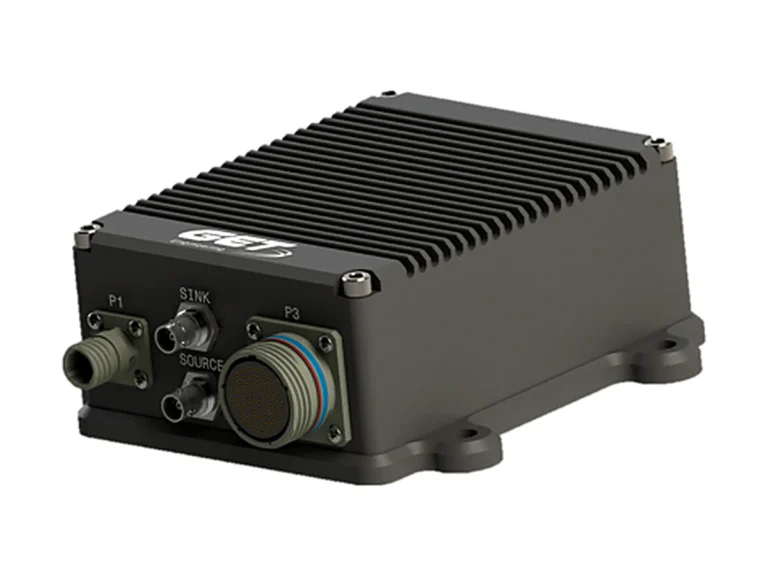
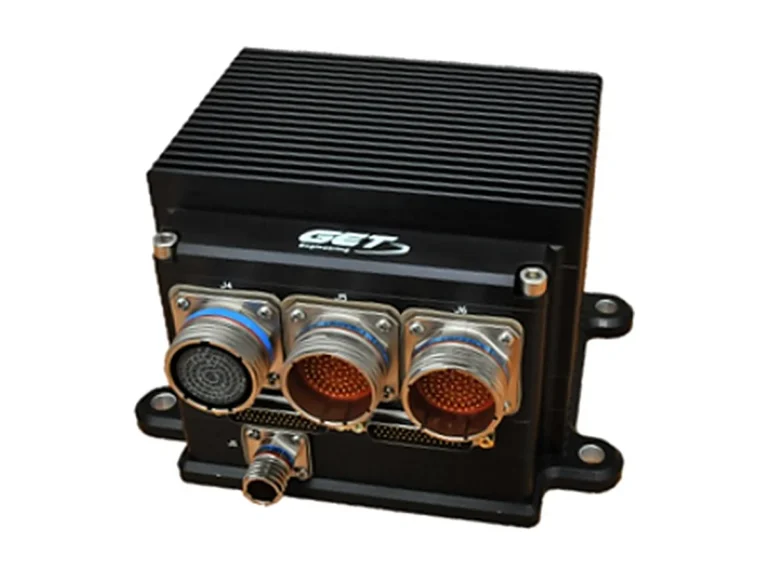
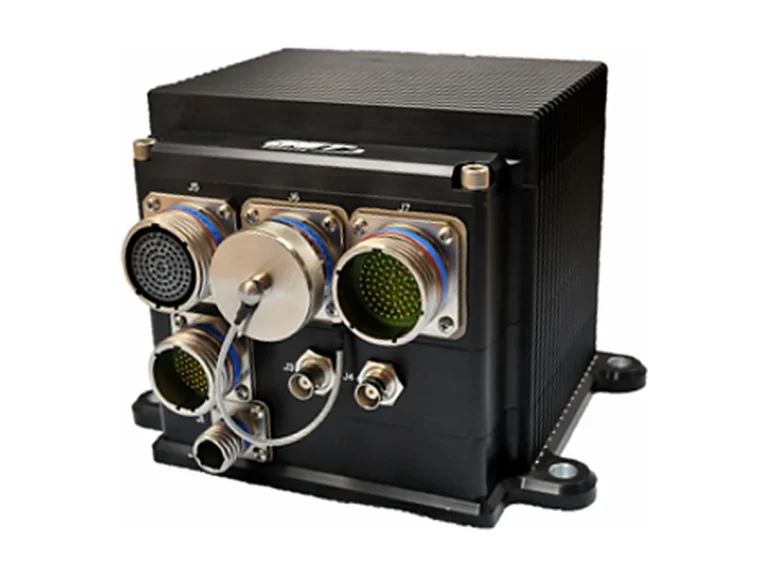
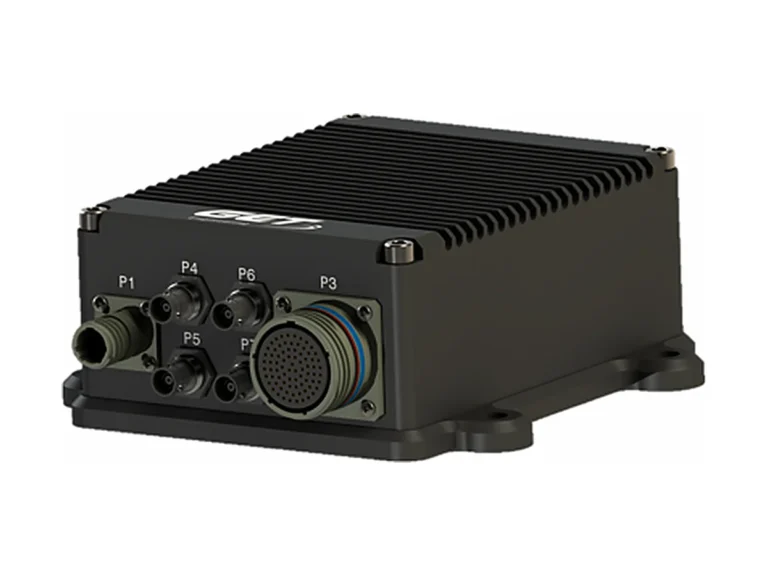
GET Engineering builds two small form factor rugged COTS computing lines: a VNX+ VITA 90 system holding 5, 6 or 7 conduction cooled modules, and Compact Embedded Systems (CES), a fanless ring-stack chassis with MIL 38999 connectors in Mission Computer, High Density I/O, Multi-Protocol and Ethernet over Legacy Cable versions. GET states the VNX+ System is designed to meet MIL-STD-810 and MIL-STD-461. GET publishes no part numbers for VNX+ or CES; its part-numbered small form factor items are the CEN-6300 rugged Cisco router, the CEN-3300 switch (CES-90101) and the HDIO carrier 10200101. NewTec Reps represents GET Engineering.
Overview
Small form factor SOSA computing puts processing, I/O and networking in a chassis much smaller than 3U VPX, for platforms limited by size, weight and power (SWaP). GET Engineering offers VNX+ for programs that want an open, SOSA aligned module standard, and CES for programs that want a configurable fanless box with legacy protocol I/O. Both are COTS lines configured from GET's module and board options.
What does VNX+ VITA 90 mean for this product line?
VNX+ (VITA 90) is the open standard GET's VNX+ System is built to; GET calls it a compact, modular derivative of VPX. The standard itself, its ratification and how it compares with VNX and 3U VPX are covered in What is VNX+ (VITA 90)?
Which standards apply: VITA 90, SOSA or MIL-STD?
The module standard is VITA 90, with SOSA alignment as GET states it; those decide interoperability. The environmental and EMI targets are separate: GET states the VNX+ System is designed to meet MIL-STD-810 and MIL-STD-461, without publishing test levels. For CES, gethdio.com states no MIL-STD; GET's own CES product listing says the CES is designed to meet MIL-STD-810 and MIL-STD-461, with MIL-STD-704F and MIL-STD-1275D compliant power. For how these standards map across product types, see MIL-STD COTS hardware.
What is GET CES?
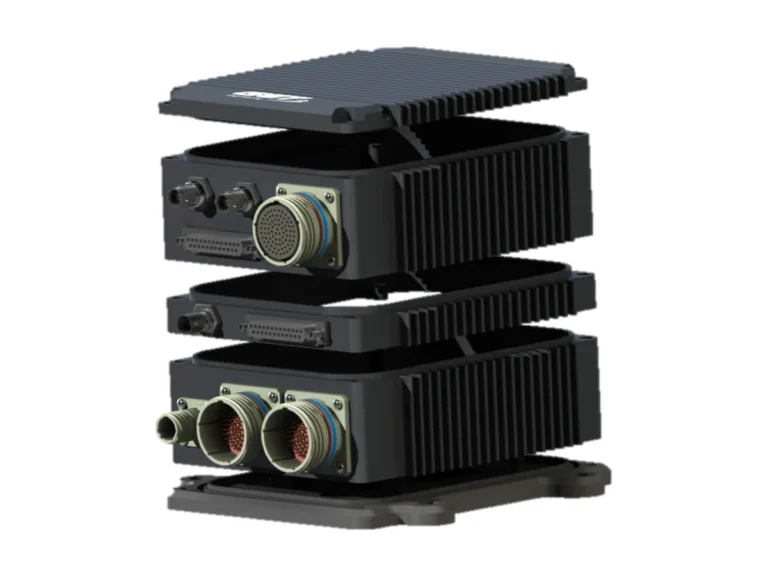
GET Compact Embedded Systems are fanless small form factor systems built from stacked aluminum chassis rings with MIL 38999 connectors. Each ring adds a board, so I/O and protocol options grow without a new enclosure. GET offers Intel Atom, i3, i5 or i7 processors and AC or DC power supplies.
Products and manufacturers
NewTec Reps represents GET Engineering for both lines; GET's sales offices page lists NewTec Reps for Maryland, Virginia and the District of Columbia.
| Line | Strongest at | Configurations GET publishes |
|---|---|---|
| GET VNX+ System | Open standard modules, SOSA aligned, conduction cooled, field replaceable at the module level | 5, 6 or 7 module system |
| GET CES | Fanless SFF box with legacy Navy and avionics protocols and dense I/O | Mission Computer CES, High Density I/O CES, Multi-Protocol CES, 1 & 10 G Ethernet over Legacy Cable CES |
Specifications
GET VNX+ System and modules
GET publishes no part numbers for its VNX+ System or any VNX+ module on gethdio.com, and no VNX+ datasheet link. Facts below come from gethdio.com/vnx.
| Item | GET published specification |
|---|---|
| Standard | Defined by VITA 90; aligned with ANSI standards and SOSA principles |
| Module count | 5, 6 or 7 modules |
| Cooling | Conduction cooled for sealed, harsh environments |
| Retention | Wedge-lock, VITA 90.4 compliant |
| Environmental | Shock, vibration, extended temperature; designed to meet MIL-STD-810 and MIL-STD-461 (values not published) |
| Connectors | Military grade |
| Model / product number | Function | Published specs | Source | Ask an engineer |
|---|---|---|---|---|
VNX+ System | Conduction cooled VITA 90 system | 5, 6 or 7 modules; VITA 90.4 wedge locks; designed to meet MIL-STD-810 and MIL-STD-461 | GET VNX+ | Ask an engineer |
VNX+ SBC Module | Single board computer | Processor and I/O not published (GET's SBC page is password protected) | GET VNX+ | Ask an engineer |
VNX+ GPU Module | GPU processing | Ask an engineer | GET VNX+ | Ask an engineer |
VNX+ FPGA Module | FPGA processing | No specs published; GET lists low power AI as a VNX+ application | GET VNX+ | Ask an engineer |
VNX+ IMU Module | Inertial measurement | Ask an engineer | GET VNX+ | Ask an engineer |
VNX+ PNT Module | Position, navigation and timing | Ask an engineer | GET VNX+ | Ask an engineer |
VNX+ SSD Module | Storage | Ask an engineer | GET VNX+ | Ask an engineer |
VNX+ High Density IO (HDIO) Module | Analog and digital I/O | A/D, D/A, GPIO, DI, DO, temperature | GET VNX+ | Ask an engineer |
VNX+ MiniPCIe I/O Module | MiniPCIe carrier | MIL-STD-1553, CAN | GET VNX+ | Ask an engineer |
VNX+ Protocols Module | Protocol I/O and conversion | Ethernet, MIL-STD-1553, NTDS, serial, CAN; protocol converters and virtual high speed protocols | GET VNX+ | Ask an engineer |
VNX+ Ethernet Switch Module | Ethernet switch | Port count not published | GET VNX+ | Ask an engineer |
VNX+ Ethernet over Cable (MoCA) Module | Ethernet over cable | Cable types not published | GET VNX+ | Ask an engineer |
VNX+ Power Supply Module | Power | AC input with filter, DC input with filter, hold-up | GET VNX+ | Ask an engineer |
GET Engineering does not publish part numbers for every model listed here. Speak to an Engineer for the current datasheet and ordering codes.
GET Compact Embedded Systems (CES)
GET publishes no part number for any CES model and no CES datasheet link on gethdio.com.
| Model | Function | Published specs | Source |
|---|---|---|---|
Mission Computer CES | SFF mission computer | Intel Atom, i3, i5 or i7, single, dual or quad core; mix and match A/D, D/A, DI, DO; NTDS, ATDS, MIL-STD-1553 | GET |
High Density I/O CES | I/O system | Up to 60 I/O per board; A/D, D/A, DI, DO, serial, temperature, FPGA | GET |
Multi-Protocol CES | Protocol converter | NTDS, ATDS, MIL-STD-1553, ARINC 429/575, ARINC 717/573, serial, OD-19, Ethernet | GET |
1 & 10 G Ethernet over Legacy Cable CES | Network over installed cable | 10/100/1000 Mbps over coax or NTDS serial cable for over 1000 ft; up to 10 Gbps over NTDS parallel cable | GET |
GET Engineering does not publish part numbers for every model listed here. Speak to an Engineer for the current datasheet and ordering codes.
All CES models use aluminum chassis rings, MIL 38999 connectors, a fanless design and an AC or DC power supply option. GET's own CES product listing adds relay, video, FPAA and multi-port switch or router I/O, NMEA among the protocols, MIL-STD-461 EMI filters, and power compliant with MIL-STD-704F and MIL-STD-1275D. GET publishes no CES size, weight or operating temperature.
Part-numbered GET small form factor hardware
These GET small form factor items carry published part numbers or ordering codes.
| Part number | Product | Published specs | Source |
|---|---|---|---|
CEN-6300 | Rugged Cisco ESR 6300 router | Cisco ESR6300; 6 Gigabit Ethernet (2 routed, 4 switched) plus serial; options PoE/PoE+ and 1 Gbps 850 nm multimode WAN fiber; 18 to 36 VDC; fanless, conduction cooled; MIL-DTL-38999 connectors; designed to meet MIL-STD-810, MIL-STD-461 and RTCA DO-160 | GET CEN-6300 |
CEN-3300 (CES-90101) | Rugged Cisco ESS 3300 switch, 24 LAN ports | 24x 1000BASE-T, 2x 10GBASE-SR; suffix -P adds PoE/PoE+, suffix -MMF adds 10 Gbps 850 nm multimode; 18 to 36 VDC; designed to meet MIL-STD-810, MIL-STD-461 and RTCA DO-160 | GET CEN-3300 |
10200101 | HDIO PCIe/104 carrier (model 2001) | Three HDIO modules plus one MiniPCIe module; up to 60 I/O pins; conduction ring to the enclosure; -40 to +85 °C operating | GET 10200101 |
GET does not state that CES uses the 10200101 carrier. The Cisco units are covered on the rugged Cisco networking page.
How to choose
| Requirement | GET VNX+ System | GET CES |
|---|---|---|
| Open VITA module standard | Yes (VITA 90) | No |
| SOSA aligned architecture | Yes (GET states SOSA principles) | Not stated |
| Stated MIL-STD design target | MIL-STD-810 and MIL-STD-461 (designed to meet) | MIL-STD-810 and MIL-STD-461 (designed to meet, in GET's product listing; not on gethdio.com) |
| Published part numbers | None (VNX+ System and modules) | None (four CES models) |
| GPU or FPGA processing module | Yes | FPGA I/O boards (High Density I/O CES) |
| Intel x86 mission computer | SBC module (processor not published) | Atom, i3, i5 or i7 |
| NTDS or ATDS I/O | NTDS protocol module | NTDS and ATDS (Multi-Protocol or Mission Computer CES) |
| MIL-STD-1553 | Protocol or MiniPCIe module | Multi-Protocol or Mission Computer CES |
| ARINC 429 / 575 / 717 | Not listed | Multi-Protocol CES |
| IMU or PNT in the same chassis | Yes | Not listed |
| Ethernet over existing cable | Ethernet over cable (MoCA) module, cable types not published | 1 & 10 G Ethernet over Legacy Cable CES (coax, NTDS serial, NTDS parallel) |
Choose VNX+ when the program asks for SOSA alignment or an open module standard, or needs GPU, IMU or PNT modules. Choose CES when the need is a fanless box with legacy protocols such as NTDS, ATDS or ARINC 429, or more I/O added by stacking rings. Neither line has published part numbers, so NewTec Reps requests the ordering information from GET for each configuration. Where a part number is required up front, GET's part-numbered small form factor items are the CEN-6300 router, the CEN-3300 switch (CES-90101, with -P or -MMF options) and the HDIO carrier 10200101.
Which small rugged computer handles NTDS and MIL-STD-1553 together?
GET Engineering's Multi-Protocol CES and Mission Computer CES both list NTDS, ATDS and MIL-STD-1553, and GET's VNX+ protocol module lists NTDS and 1553. To scope either, speak to an engineer.
Which VNX+ system has IMU and PNT modules?
GET Engineering lists IMU and PNT modules for its VNX+ (VITA 90) system alongside SBC, GPU and FPGA modules. For module part numbers and availability, speak to an engineer.
Which GET small form factor system supports ARINC 429?
GET Engineering's Multi-Protocol CES lists ARINC 429/575 and ARINC 717/573. NewTec Reps can confirm channel counts with GET.
Applications
GET lists these VNX+ applications: mission computers, sonobuoys, IMU, software defined radio, position/navigation/timing, video processing, low power AI, protocol conversion and Ethernet over cable. GET describes CES as a rugged fanless small form factor family used in military and industrial platforms.
Frequently asked questions
Does GET publish part numbers for its VNX+ products?
Not on gethdio.com. GET lists the system and its module types without part numbers, so NewTec Reps requests the ordering information from GET for each configuration.
How many modules does the GET VNX+ system hold?
GET Engineering offers its VNX+ system with 5, 6 or 7 modules. Modules include SBC, GPU, FPGA, IMU, PNT, SSD, I/O, protocol, Ethernet switch and power supply.
Is GET CES the same as VNX+?
No. CES is GET's own fanless ring-stack chassis with MIL 38999 connectors, while VNX+ follows the VITA 90 open standard. Both are small form factor lines from GET Engineering.
Which processors does GET CES use?
GET lists Intel Atom, i3, i5 and i7 options in single, dual or quad core configurations for the Mission Computer CES.
Can a GET small form factor system run Ethernet over existing NTDS cable?
On the CES side, yes: GET's 1 & 10 G Ethernet over Legacy Cable CES lists Ethernet over NTDS serial cable and NTDS parallel cable as well as coax. For VNX+, GET lists an Ethernet over cable (MoCA) module but does not state which cable types it supports.
Can I order an evaluation unit of a GET VNX+ or CES system?
Yes. Evaluation units are purchased through NewTec Reps, the same way as production quantities. GET publishes no part numbers for these lines, so speak to an engineer for a quote on the configuration you want to evaluate.
Related pages
Have a requirement or a part number?
Speak to an Engineer who knows these product lines. Send what you have, even if it is only a rough spec, and we will come back with the models that fit.
Send the module mix you need (processor, GPU or FPGA, protocols, I/O count), the input power and the temperature range, and NewTec Reps will work the configuration with GET Engineering.
Your message is with an engineer
Thanks. We have your note about Rugged Small Form Factor SOSA. An engineer from NewTec Reps will reply to the email address you gave us.
What happens next:
- An engineer reads your message and checks it against the product lines we represent.
- We reply with the models that fit, the datasheets and any questions we need answered.
- When you are ready for pricing, we get you a quote from the manufacturer.